Community Areas of Research Interest (C-ARI)
Setting our research agenda with Bradford communities
At Bradford Health Determinants Research Collaboration (HDRC), we believe research should start with the voices of the people it serves.That’s why we’ve worked closely with communities across the district to understand what really matters to them when it comes to challenges around the wider determinants of health such as the social and economic factors like housing, education, transport and employment. These conversations have shaped our Community Areas of Research Interest (C-ARI) - a set of priorities shaped through a community lens.
These insights will help us focus on the issues that impact residents the most and will shape our work going forward. This community-driven approach sits alongside our wider Areas of Research Interest (ARI) work with Bradford Council staff, creating a shared vision for a healthier Bradford.
If you wish to work with HDRC Bradford to answer any of the research questions set out below, please get in touch at [email protected].
10 Community workshops
We began by examining existing local evidence such as reports and research shared by our partners, to draw out themes on the wider determinants and created a list of specific research area groups. We then took these research area groups to community settings and carried out a Diamond ranking exercise to prioritise each area in order of importance, but also to draw out key challenges under each research area group. We held 10 prioritisation workshops across the district, two in each constituency covering Bradford South, Bradford East, Bradford West, Shipley, Keighley and Ilkley.
We worked closely with our collaborators, academic colleagues, council neighbourhood teams and local public contributors (resident representatives) to identify and carry out ‘intentional selecting’ of micro-organisations, underrepresented groups and residents, who we rarely hear from to support this work.
Question generating session
Following this data collection phase we held an academic led ‘question generating session’ and invited the 10 community groups and residents that we worked with at the workshop stage. In this session we presented the collated themes from our workshops and facilitated the coproduction of key research questions under each of our 8 priority research area groups. The C-ARI questions, published in this document capture Bradford district’s priorities shaped by the lived experience of its communities.
Research priorities of our communities
Together, we’re building research that reflects real lives, real challenges, and real opportunities for change.
In developing the C-ARI, the community cohorts identified eight Research Area Groups (RAG) that mattered most to them. These are:
- Crime and Safety
- Cost of Living
- Access to Education
- Employment and Skills Provision
- Inclusion and Belonging
- Neighbourhoods and Environment
- Transport
- Adequate Housing
It is important that the work we do in answering the questions set out in the C-ARI aligns with Bradford Council’s ambitions as set out in the District Strategy and so we have mapped our questions to the four outcomes. These are:
- Growth and regeneration: We will grow our local economy in an inclusive and sustainable way by increasing productivity and supporting businesses to innovate, invest and create great jobs.
- A great place to grow up: We will help our children to have the best start in life by improving life chances, educational attainment and overall quality of life for all young people reGrowth and Regenerationdless of their background.
- Happy and healthy people: We will help people from all backgrounds to lead long, happy and productive lives by improving their health and socio-economic wellbeing.
- Safe and strong communities: We want the Bradford District to be a place where everyone can play a positive role in their community and be proud to call the district their home.
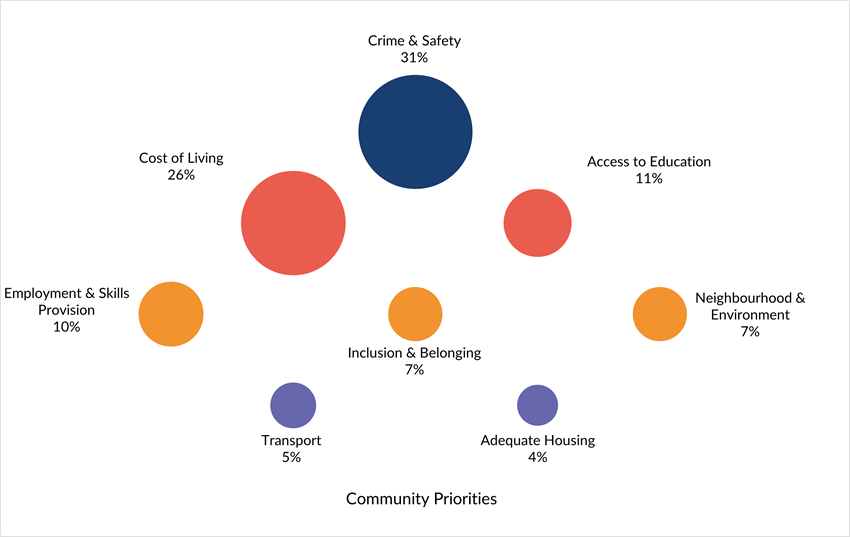
Above: A visual representation of the priorities of our communities.
We have set out the coproduced questions below under the eight research area groups and have marked them to show which of the Bradford Council Ambitions they most align with.
1. Crime and Safety
1.1 How can we rebuild trust in the justice system in Bradford to strengthen relationships between the police and communities? (Safe and Strong Communities)
- Has trust in the police declined locally in Bradford District, what factors have contributed to this and what strategies to build relations have worked well in similar cities?
- How can the police become more visible and approachable in neighbourhoods?
- What training or cultural awareness initiatives could help improve mutual understanding between the police and communities?
- How can transparency and accountability be improved within policing and the justice processes?
- How do the processes for reporting and response rates affect resident willingness to report crime and what interventions could help?
- How do residents define “trustworthy” policing practices?
1.2 How can we address fear of crime levels in Bradford District? (Safe and Strong Communities)
- How can we involve citizens in crime prevention and safety initiatives?
- What communication methods can effectively share accurate crime data to help residents understanding?
- What role can local media and social platforms play in shaping perceptions of crime in Bradford District?
- How does speeding and reckless driving impact perceptions of neighbourhood safety and what measures do residents believe would effectively reduce vehicle crime and traffic violations?
- To what extent do residents perceive certain areas in Bradford as ‘no-go zones’, and how do these perceptions compare with actual crime data and safety indicators?
1.3 How can community cohesion be improved through justice and policing? (Safe and Strong Communities)
- What collaborative projects can bring different community groups together to address local challenges around crime?
- How can restorative justice approaches be integrated into local police practices?
- What impact would integrated crime awareness and drug prevention into school curricula have on youth safety?
- How does family-based education influence the effectiveness of school-based drug education programs in preventing substance misuse among adolescents?
- How does the current policing funding model affect resources to investigate the day-to-day crimes affect residents?
1.4 How can citizens be empowered to participate in shaping justice and policing? (Safe and Strong Communities)
- What barriers prevent people from engaging with decision-making processes?
- What role can community-led oversight or forums play in restoring confidence?
- What digital tools or platforms could support ongoing dialogue?
- How can community engagement initiatives promote cohesion and shared responsibility for safety?
1.5 How effective are current awareness campaigns in preventing online fraud among vulnerable populations?(Safe and Strong Communities)
- Which demographic groups are most vulnerable to online scams in the community?
- What types of scams are most prevalent, and how do they affect victims’ financial and emotional well-being?
- How do we work with crime prevention teams to ensure online safety for vulnerable groups?
2. Cost of Living
2.1 How can government policy effectively address cost-of-living challenges that have national drivers but local impacts? (Happy and Healthy People)
- How are people experiencing food insecurity in Bradford District, and what are the localised policy levers available?
- To what extent do current benefit schemes provide sufficient financial support to cover essential living costs, such as food and energy, for households in Bradford District and where are the gaps?
- How should local authorities adapt their roles to mitigate the cost-of-living crisis through community-based services, policy advocacy, partnerships, and interventions in housing, utilities, food, travel, and employment?
- What can we learn from previous community funding schemes that successfully addressed cost-of-living issues?
- How can one-off support schemes be made fairer and more effective for Bradford District residents by comparing to previous initiatives?
2.2 How does the cost of living affect mental and physical health in Bradford District? (Happy and Healthy People)
- What are the short- and long-term health impacts of financial stress?
- How does reduced disposable income affect access to healthy food and physical activity?
- What community-based interventions can mitigate health risks linked to economic hardship?
2.3 How can schools and community initiatives in Bradford prepare young people for real-world challenges and improve mental health and wellbeing? (Growth and Regeneration)
- How can raising expectations and hope for future opportunities improve mental health and wellbeing among young people and what can be done to aide this?
- How can schools equip students with skills and resilience to navigate economic and social challenges?
- How can third sector organisations improve access to physical activity and wellbeing opportunities in working-class communities?
- What role can financial literacy education in Bradford District play in debt prevention and management of insufficient funds for cost of living?
2.4 How do work shift patterns and benefit structures influence family wellbeing and child development in Bradford? (A Great Place to Grow Up)
- Since Covid, how have benefit packages (or lack thereof) impacted working parents’ access to healthy food?
- Is there evidence that reducing working hours improves children’s behaviour, learning, and wellbeing?
- How can Universal Credit users be supported compassionately to balance work and home demands without punitive sanctions?
- How do rising costs affect housing stability, social participation, and family wellbeing?
2.5 What are the drivers of food insecurity in Bradford District, and how can community-based interventions reduce reliance on food banks? (Happy and Healthy People)
- Why are food bank usage rates so high, and what community-level factors contribute?
- How can local schemes better support working families who do not qualify for benefits?
- What lessons can be drawn from successful food security interventions elsewhere?
- What impact can community funding schemes have on reducing cost of living constraints in Bradford District?
2.6 How can we create pathways to quality employment and economic resilience for Bradford District residents? (Growth and Regeneration)
- How can job creation initiatives be aligned with local skills and aspirations?
- What role can partnerships between businesses, education providers, and local authorities play in improving social mobility?
- How can Bradford attract investment to generate sustainable employment opportunities?
- What role do quality job opportunities play in giving young people a genuine sense of purpose?
- What policy mechanisms or employer incentives can drive wage growth locally?
- How does wage stagnation and inflation interact in Bradford’s economy?
- What role can partnerships with businesses and government play in wage reform?
3. Access to Education
3.1 Do young people in Bradford District perceive a gap between the skills and education they can access and what is required for their desired careers? (Growth and Regeneration)
- What careers do young people in Bradford aspire to, and what qualifications or skills are needed for these careers?
- Do young people feel local education providers offer sufficient opportunities to meet their needs?
- How do perceptions of education and skills from young people differ between those in school, college, and apprenticeships?
- What role do employers play in bridging the skills gap between education and training?
3.2 How equitable is the provision and funding of Special Educational Needs (SEN) services across Bradford schools? (A Great Place to Grow Up)
- How does identification of the need for assessment for SEN support vary across schools in Bradford District, and do factors such as sex and age of pupils affect this?
- How is funding for SEN provision distributed, and is it proportionate to the level of need?
- Under what circumstances is it preferable to enrol a child in a specialist over mainstream, considering resource provision in specialists’ school and aspects such as social integration and alignment with real-world experiences?
- How satisfied are parents with the SEN support their children receive?
3.3 How does the cost and availability of public transport affect access to education and skills development in Bradford? (Growth and Regeneration)
- Is public transport cost and availability a significant barrier to education for young people?
- To what extent does the availability of public transport influence participation in skills training or further education?
- What is the relative contribution of transport limitations on access to education and skills when compared with other barriers (e.g., childcare, technology access)?
4. Employment and Skills Provision
4.1 Is access to employment equitable in the district, and if not, what are the barriers? (Growth and Regeneration)
- What are the main barriers migrant communities face in accessing employment?
- How do rapidly evolving recruitment processes impact different communities in Bradford District, such as online only applications?
- Do with parents with childcare responsibilities in Bradford District have equal access to flexible working arrangement, or does this differ by role seniority?
- Are certain groups disproportionately disadvantaged by unemployment, due to limited literacy or digital access skills?
- Does access and frequency of transport affect people applying for jobs?
- How do childcare responsibilities affect employment opportunities for parents in Bradford District?
- What unique employment challenges do single-parent families face compared to dual-parent households?
- What initiatives have been successful in supporting transient or homeless individuals into work?
- To what extent are workplaces in Bradford accessible and accommodating for people with disabilities?
4.2 What is the level of awareness among residents about where and how to search for employment opportunities, and how do lengthy recruitment processes influence candidate engagement and job acceptance rates? (Growth and Regeneration)
- What types of application and interview preparation support are available in Bradford District, how accessible is it, and what impact does limited access have on employment outcomes?
- How can residents in Bradford district navigate employment websites or know where to look for work?
- How do language barriers affect job-seeking success among non-native speakers in Bradford?
- How do we make job interviews more accessible for everyone and how can this improve employment economy given the lower than average job density?
- How can we support asylum seekers to work sooner and in their own profession?
4.3 What role do media narratives and AI-driven content play in shaping perceptions of Bradford district?(Growth and Regeneration)
- To what extent does Bradford’s public image contribute to the outmigration of skilled individuals (‘brain drain’) from the district?
- How does the outward image of Bradford District impact business investment?
5. Inclusion and Belonging
5.1 What are the barriers to inclusion in local governance in Bradford District and which groups are particularly affected? (Safe and Strong Communities)
- What strategies are most effective in fostering inclusion and belonging within communities, particularly in decision-making and investment in public spaces?
- Which groups are underrepresented in Bradford’s local governance structures, and what factors contribute to their lack of involvement?
- How do socioeconomic factors and ethnicity or experiences of discrimination influence involvement in local governance.
5.2 To what extent do public institutions accommodate cultural and religious practices in their operations in Bradford? (Safe and Strong Communities)
- How can cultural competence training improve service delivery in Bradford?
- What forms of discrimination are most prevalent in local schools and public services?
5.3 How can community centres and other community assets be effectively used to foster inclusion and intercultural dialogue? (Safe and Strong Communities)
- What is the role of community centres to help ‘inclusiveness’ in Bradford?
- What types of investments in public spaces have the greatest impact on community pride and perceptions of safety?
- What role can schools, faith groups, and voluntary organisations play in promoting cohesion?
6. Neighbourhoods and the Environment
6.1 Which types of interventions are most successful in influencing environmental and social issues like fly-tipping, dog fouling, noise pollution, and illegal vehicle use in urban neighbourhoods and what examples can we learn from? (Safe and Strong Communities)
- How can partnerships between community/faith groups, residents, and councils be strengthened to tackle environmental and social issues long-term?
- To what extent do community clean-ups and shared initiatives reduce visible environmental problems and how does this impact trust and cooperation between different communities?
- What motivates residents to participate in community-led initiatives (e.g., clean-ups, Growth and regeneration) and are participants more likely to report or discourage anti-social behaviours after involvement?
6.2 What are the drivers of anti-social behaviour in Bradford District, and what interventions might be successful in addressing them, including the role of enforcement? (Safe and Strong Communities)
- Where are the antisocial behaviour hotspots in Bradford and how do we tackle it?
- Which types of interventions are most successful in fostering local pride and ownership and what examples can we learn from?
- What impact do consistent youth activities have on reducing anti-social behaviour?
- What long-term benefits arise from regular youth engagement?
6.3 What does inclusive planning look like for the future of Bradford District? (Growth and Regeneration)
- What are the gaps in service provision for older adults in rural areas like Baildon, and how can they be addressed through inclusive planning?
- What does it mean to ‘see’ public investment and what impact does this have on residents?
- How do visible investments in public spaces affect residents’ sense of pride and safety?
- How can multi - generational projects contribute to rebuilding community spirit and reducing social fragmentation?
7. Transport
7.1 How does limited transport access in under-served areas influence health, economic opportunities, and access to essential resources such as healthy food, education, and employment and who is impacted the most? (Growth and Regeneration)
- Does limited transport contribute to food insecurity and poor nutrition in underserved areas?
- To what extent does the availability of night-time bus and train services affect the feeling of safety for women and girls in Bradford District?
- How do transport limitations affect businesses’ investment decisions?
- How does the removal of access to free school buses affect children and parents in the Bradford District?
7.2 What areas of Bradford District are underserved for public transport? (Growth and Regeneration)
- How do transport gaps influence participation in training or skill development programs?
- How do limited service hours (e.g., no night buses, late morning starts) affect night-shift and early-morning workers?
- What lessons can be learned from European and global regions that have successfully implemented effective transport systems?
- Do residents feel consulted, and that planning decisions around transport are co-produced with them?
- How does current route planning affect people in outlying neighbourhoods compared to those near the city centre?
7.3 How does the absence of a unified ticketing system in Bradford district impact the ease of travel for commuters who need to use multiple transport modes, and does this barrier disproportionately affect certain groups (e.g., low-income, rural residents) (Growth and Regeneration)
- How does the lack of integrated ticketing across different transport providers (e.g., bus companies and trains) affect accessibility, affordability, and user experience in public transport systems?
- How do the costs of multiple ticket purchases and extra travel time caused by connecting buses influence the overall affordability of public transport compared to private transport options?
8. Adequate Housing
8.1 How affordable and accessible is adequate housing for residents of Bradford compared to those nationally? (Growth and Regeneration)
- How does the cost of good quality housing compare to average wages for residents in Bradford?
- What is the difference between household income and expenditure for residents in Bradford?
- How does the average size and cost of residential properties in Bradford compare to national averages?
- How does the cost-of-living crisis influence access to adequate housing?
8.2 What is the relationship between housing quality and mental health and wellbeing in Bradford and similar areas nationally? (Happy and Healthy People)
- How can we measure the impact of poor housing conditions on mental health and family wellbeing across different life stages?
- What does current evidence reveal about the link between housing conditions and neighbourhood deprivation in Bradford and the UK?
- How does inadequate housing affect children’s health, development and overall wellbeing?
- What role does overcrowding play in family wellbeing and children’s educational outcomes?
- How can housing provision and design evolve to meet the needs of residents across different life stages?
8.3 How do housing supply shortages and allocation systems influence equity and access for different life stages and vulnerable groups? (Growth and Regeneration)
- How is housing allocation managed in Bradford, and how does it adapt to life stage changes?
- What are the consequences of having large homes occupied by single individuals in the context of housing shortages?
- How does the shortage of housing stock affect access for vulnerable groups?
8.4 How do social housing and private rental sectors compare in terms of quality, accountability, and pathways to homeownership? (Growth and Regeneration)
- How do conditions in social housing compare to private rental housing and what are solutions to improve housing?
- Why do housing providers and landlords often fail to respond to tenant needs and what strategies can improve communication and responsiveness?
- How can tenant and landlord voices be amplified in housing policy decisions?
- What mechanisms can improve standards and accountability in private and rented housing sectors?
- How do rates of homeownership and progression onto the property ladder in Bradford compare to national averages?